
The Christmas story is full of angels.
An angel brought surprising news to a young virgin named Mary: she would bear a son. Another angel appeared to Joseph in a dream, telling him not to be afraid to take Mary as his wife. Nine months later, a multitude of angels startled shepherds in the dark of night, announcing that the Savior had been born.
Have you ever wondered what an angel looks like? Well, a few weeks ago, my wife Lili and I met one. Her name is Tessie*.
Let me tell you the story.
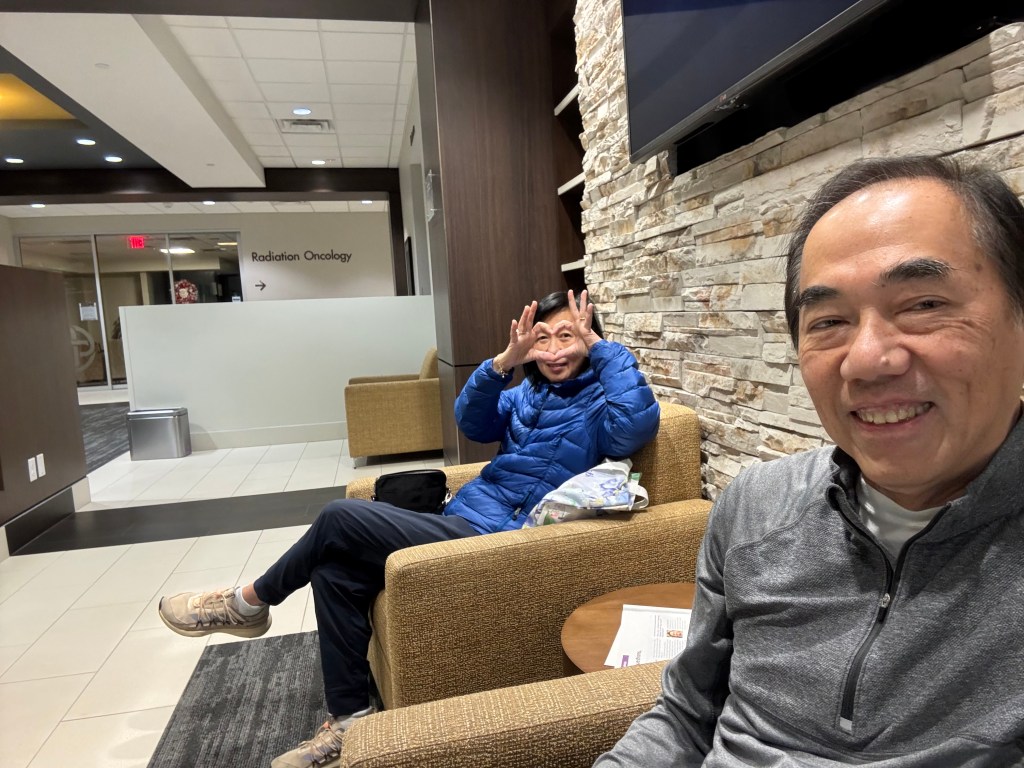
“We will assign you to a row, and then you can pick any open seat in that row,” the nurse said as Lili checked in to the Texas Oncology Infusion Clinic at Presbyterian Dallas Cancer Center on an early December morning.
It was the fifth month of Lili’s battle with cancer, and this was her first chemotherapy session.
We had hoped she wouldn’t need chemo—that she could go straight to radiation. But her Oncotype DX score came back just slightly above the no-chemo-needed threshold. Having heard what chemotherapy can do to the body, Lili was understandably not thrilled. Scared and sad as she was, she knew she had to go through it to reduce the chance of recurrence.
“OK, you’re in Row 4,” the nurse said cheerfully.
After a brief stop in a small room where another nurse took Lili’s vital signs, we walked down to Row 4. A “row” is like a long office hallway, with about six reclining chairs on each side. Row 4 was at the far end of the building, and most of the chairs were still empty. Only one patient sat on the far side.
We chose the third chair on the left, near a window. Beside it was a small bench where I could sit and work on my laptop. It was a sunny day. Through the window, I could see the blue sky dotted with white clouds—an almost ironic calm for what we were about to face.
Soon another nurse arrived. “My name is Sabrina,” she said with a warm smile. “I’ll be taking care of your chemo today. First, let’s find a vein.”
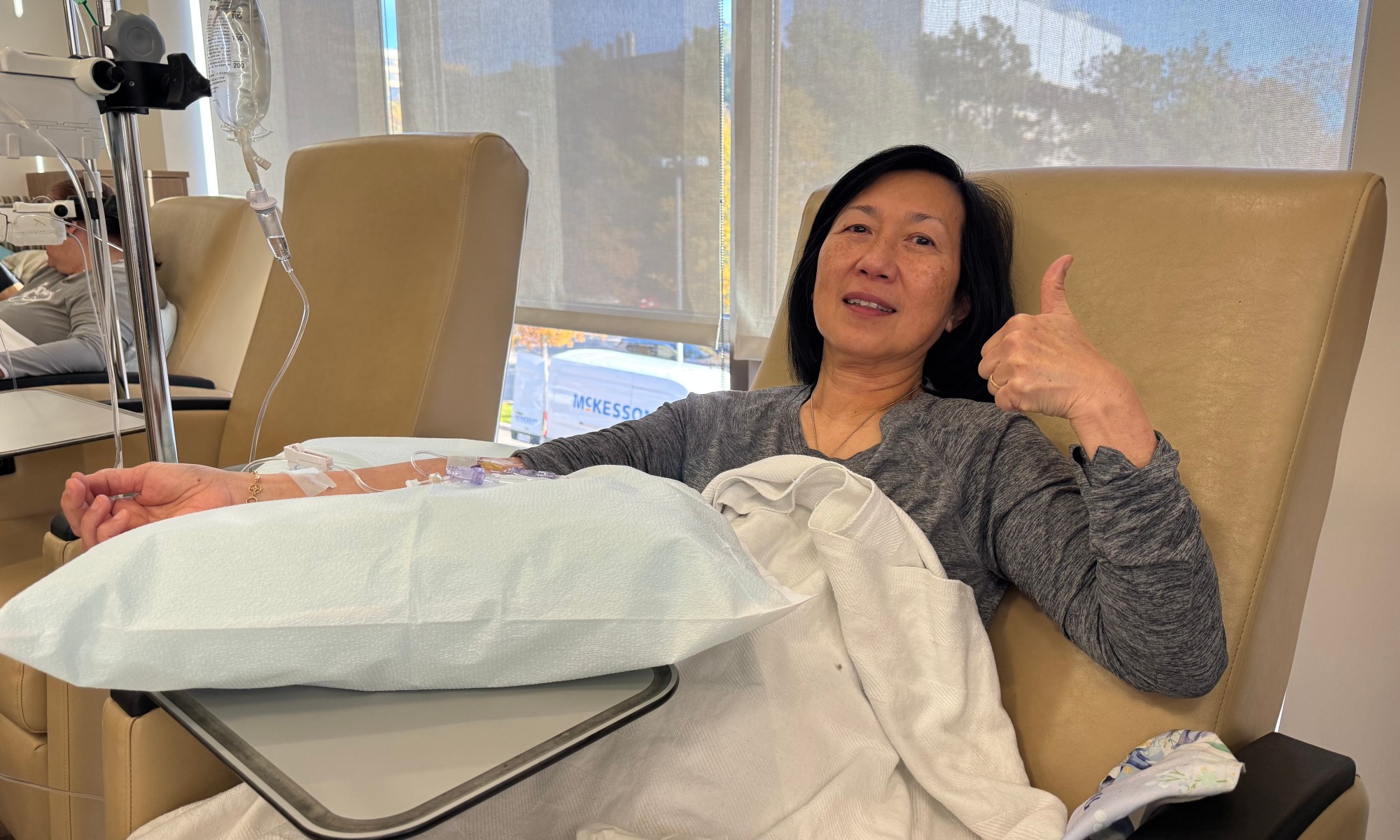
She quickly located a good-sized vein on Lili’s right arm, just above the elbow. But placing the IV there meant Lili would have to keep her arm straight and still for the entire session. Sabrina tried other spots on both arms, but after several attempts, she gently gave up.
“So,” she said kindly, “the big vein it is.”
By 9:30 AM, the IV was hooked up and fluids began to flow. First saline, then one by one, four medications to help prevent side effects. Finally, the first chemotherapy drug.
“Other than keeping your arm still, you’re free to read, drink, eat, use your phone, or watch TV,” Sabrina told Lili.
There was a television mounted on the wall across from her. Of all things, it was tuned to HGTV—one of Lili’s favorite channels.
As time passed, more patients arrived in Row 4.
A Hispanic woman took the chair to Lili’s right. She was accompanied by her husband, who had a prosthetic left leg. Her nurse connected the IV tubing to a port on her upper chest.
“She has a port,” Lili and I whispered to each other. “She must have a long treatment.”
A chemo port, implanted under the skin, reduces the need for repeated needle sticks. Since Lili only needs four chemo sessions —for which we are grateful, we decided against it.
Soon more chairs were filled. A white woman and a good-looking young man came in, and she took the chair directly across from Lili. She also had a port. While she received treatment, the young man worked quietly on his laptop, much like I did.
The atmosphere was subdued. We acknowledged one another’s presence, but no one spoke. Each person stayed within the small bubble of their own fear, hope, and companionship.

Then, around 11 AM, everything changed.
A lanky white woman walked in, dressed in a white shirt layered with a gray sweater, baggy wide-leg blue jeans with lots of pockets, and sneakers with mismatched socks. Her white-and-gray hair flowed to her shoulders. She radiated an easy, gregarious energy that immediately filled the space.
She joked with the nurse, telling him to administer the drug quickly and get it over with because she was strong and ready.
Barely a minute later, she wiped tears from her eyes.
“I’m sorry,” she said to us. Then she began to tell her story.
“I’ve had cancer since 1997.”
It started with breast cancer. She had a lumpectomy. Years later, the cancer returned, and she underwent a double mastectomy. The battle continued, and now it was stage four. This was the third chemotherapy regimen she had been on since 1997.
Then she asked about us. Suddenly, the strangers in Row 4 became people with names and stories.
The woman next to Lili introduced herself as Lena. She had stage 3 breast cancer and needed chemo to shrink the tumor before surgery. Her husband, smiling quietly beside her, went by the nickname Nacho.
“I don’t even know how many chemo sessions I’ll need,” she sighed.
The woman across from Lili was Amelia. She had cervical cancer.
“I’ll be here all day,” she said. “After this, I have radiation. I hate it—it makes me sick.”
The young man with her was her son. He served in the Air Force and had been stationed at Aviano Air Base in Italy, but he came home temporarily to take care of his mom.
Row 4, once silent, became alive.
We talked about our long drives to the hospital. Amelia came from Pleasant Grove – “only” 17 miles (27 km) away. Tessie lived in Denton, 42 miles (64 km) away. Lena drove from Commerce, 68 miles (109 km) to the northeast. Suddenly, our 27-mile (43 km) drive from Frisco felt short.
They shared their experiences, and as first-timers, Lili and I absorbed every word. Tessie, the most experienced among them, kept encouraging us.
“If I’m still here after 28 years,” she said with a grin, “you all can do it, too!”
At one point, Amelia asked, “Did you ever think of giving up?”
“Never,” Tessie replied without hesitation. “I still have a lot to give, and the Lord is not done with me yet.”
Several times, she spoke of her gratitude to the Lord for His blessings.
At noon, Tessie finished her treatment. She stood up and hugged Lili, Lena, and Amelia, wishing each one of them well. She did the same to a young Black woman who had just arrived and taken a seat nearby.
“I don’t know your story,” Tessie told her. “But good luck to you, too.”
Then she left, and the row fell quiet again.
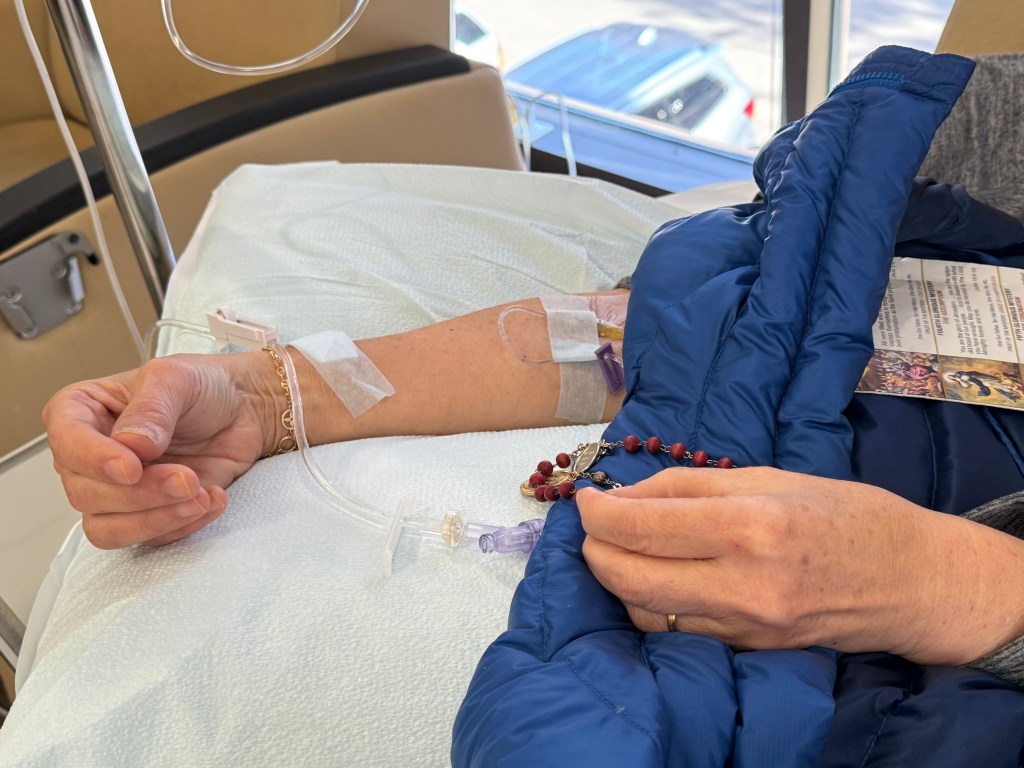
At 1 PM, Lili’s treatment finally ended. She hugged Amelia goodbye. Lena had already left. As we drove home – and for days afterward – we kept thinking about Tessie and the light she brought into an otherwise heavy day.
When I think of Tessie, I can’t help but think of angels. But what is an angel?
To me, an angel is a bearer of good news from God. One who brings hope to the hopeless—like the angel who told the old priest Zechariah that he and his barren wife Elizabeth would finally have a son.
If that is true, then Tessie is an angel.
Lili and I are still learning about cancer. Yet no one we’ve talked to has ever said they enjoy chemotherapy. It is a necessary but terrible treatment. And while you can read about side effects and hear other people’s stories, the first session is full of anxiety because everyone reacts differently, and you don’t know what it will do to your body. You just follow the doctor’s advice, pray, and hope for the best.
To have Tessie sit near us during that first chemo session—even for just an hour—was a gift from God. Here was someone who had been battling cancer for 28 years and still full of life. Her faith and optimism lifted our spirits. She wasn’t a superhero. She cried more than once. But in her very human vulnerability, she made us believe that with faith, we could do this, too.
May we never miss the angels around us.
And may we never miss the chance to be one.
*Note: The patients’ names in this story have been altered to protect their privacy.
 REFLECTIONS ON LIFE, WORK, AND FAITH IN THE 21ST-CENTURY AMERICA