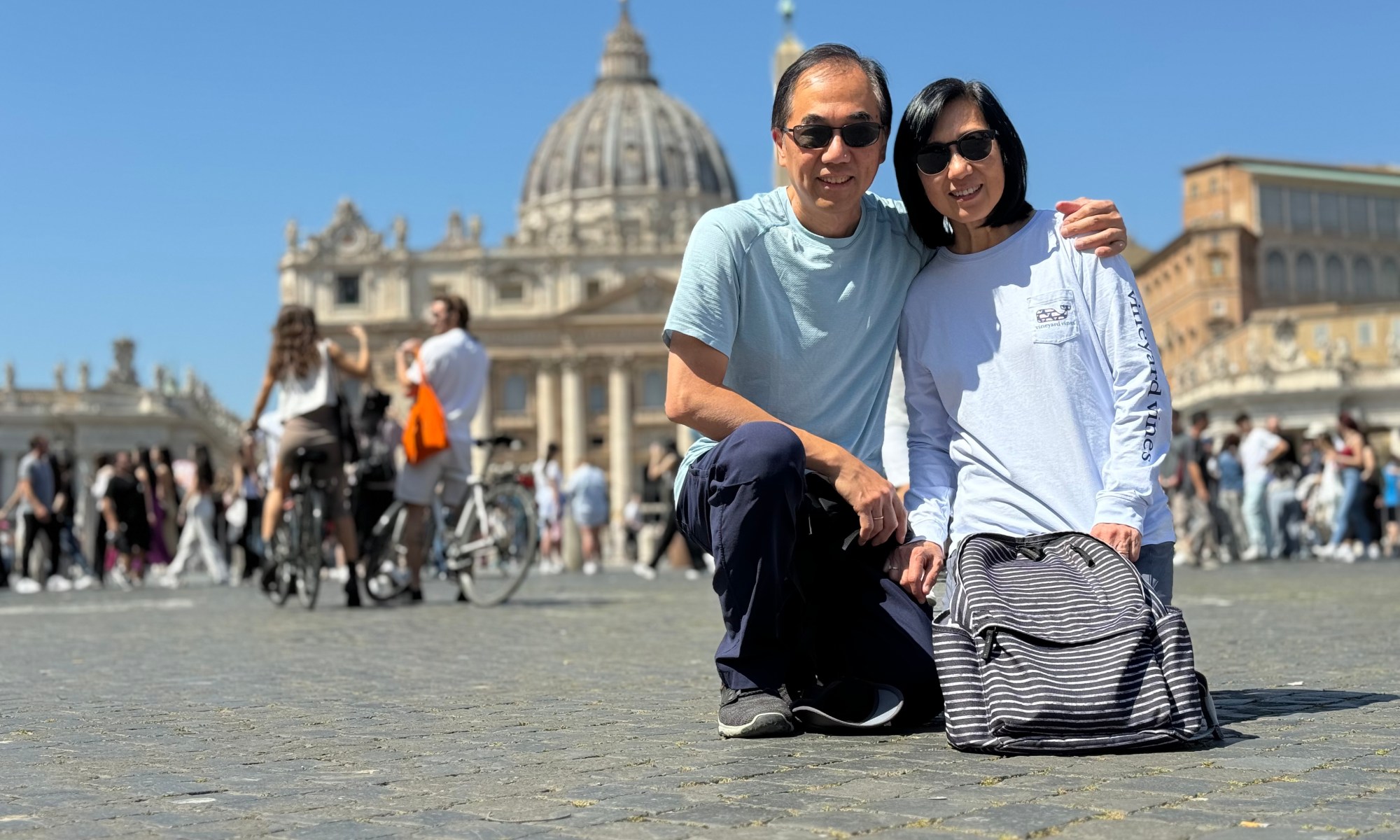
My wife and I went to Rome for the first time this year, and we found it too crowded and noisy. As the Church celebrates the great Saints Peter and Paul today, I can’t help but reflect on their lives, accomplishments, and sacrifices in the same crowded city two millennia ago.
In our first vacation to Italy in early April this year, my wife Lili and I visited four cities: Venice, Assisi, Orvieto, and Rome. Of them, Rome was our least favorite. We felt the city to be too crowded and noisy, especially after the serenity of Assisi and Orvieto. It didn’t help that during our three days there, Rome was 20ºF (10ºC) hotter than it was supposed to be, and Lili got pickpocketed as soon as we arrived in the city. As such, I didn’t post much about our time in Rome in Facebook and Instagram.
But the Mass readings leading up to Pentecost Sunday last month changed my mind. Whether I liked the city or not, the Eternal City is worth mentioning.
The readings told the story of the early Church where Jesus commissioned his disciples – people who never ventured far beyond Lake Galilee and Jerusalem – to bring Christ’s message of love and salvation to the ends of the earth (Matthew 28:19-20).
For Peter and Paul, Romae Caput Mundi (Rome, Capital of the World) – was to be their ultimate destination (Acts 23:11, John 21:18). And today, June 29, the Catholic Church celebrates their great sacrifices and accomplishments.
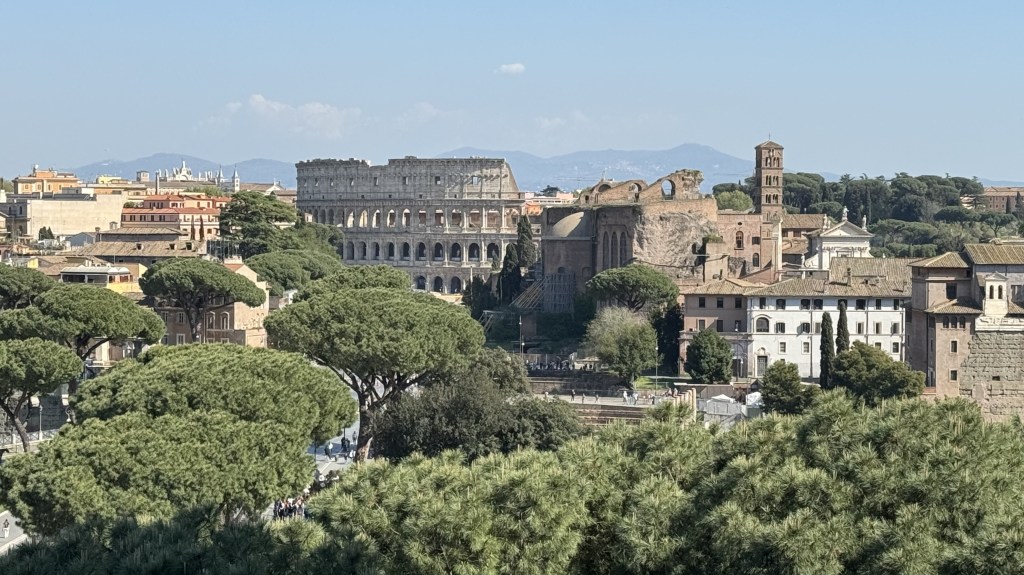
Paul, or Paulus as he was known back then, arrived in Rome in the spring of AD 60 [1]. Peter (Petrus) arrived several years before, but we don’t know exactly when [2]. Just like Lili and I, both of them would have found Rome crowded and noisy. As our Colosseum tour guide told us, 2000 years ago Rome already had a population of more than 1M people! Traffic jams were a problem in Rome back then as it is now, so much so that heavy vehicles were banned during the day. Therefore, most business deliveries were done afterwards, filling the night with noises [3].

There, in the humongous pagan metropolitan, Peter and Paul labored for Christ. Like us, they were in a foreign country thousands of miles away from the homeland. Without modern communication devices, though, they were really cutoff from friends and family. (Just consider, it took Paul two years of hard ocean journey to go from Israel to Rome!) Life in Rome was not a vacation for them.
Still, history told us that they met some kind souls in the city that provided them with hospitality, including some Roman nobility. With them, Peter and Paul must have gone to the Forum, the downtown of Rome at the time, to hear the emperor spoke, see military processions, or simply to do sightseeing. Neither Trevi Fountain nor the Vatican existed back then, but Tre Fontane (Three Fountains) and Mons Vaticanus (Vatican Hill) were there. I wondered if it ever occurred to Paul and Peter that those would be their death places.
While they walked in the city, I wouldn’t be surprised if they had some surprising encounters with people from their homeland or people that they had known from before – just like we did in Rome.

With Peter’s and Paul’s presence, the Christian community in Rome grew. But it all came to a screeching halt in AD 64. Used as a scapegoat for the great fire that started near the Colosseum and burned down a big portion of the city [4], Emperor Nero hunted and executed the Christians without mercy. Tradition holds it that Paul and Peter were killed on the same day. Their deaths are commemorated by the Church of San Paolo alle Tre Fontane and of course, by St. Peter’s Basilica.
But even as it suffered many setbacks, Christ’s message would continue to spread. Imperium sine fine (an empire without end) – the phrase that gave rise to the “Eternal City” nickname – was used by the poet Virgil to describe Rome [5]. I think it better describes Christ’s everlasting empire. As Jesus said to his disciples, “I am with you always, to the end of the age” (Matthew 28:20).

For me, the lessons from Rome – and from Peter and Paul’s story – are these: Christ sends us to unexpected places sometimes, and every human encounter is a chance to share our faith, not necessarily with words, but with the way we live and how we treat others. And what better place to do that than in a crowded city?
When we came back from Italy, Lili and I said that one-time visit to Rome was enough. But I am not so sure now. Reading Peter’s and Paul’s stories, I realized there are many more places that I’d like to see and learn. Perhaps the roads will lead us back to Rome one day.
REFERENCES:
1. Wikipedia. Paul the Apostle.
2. Falasca, S. & Ricciardi, G. Peter in Rome. EWTN.
3. Bologna, F. (2020, May 15). Historical city travel guide: Rome, 1st century AD. The British Museum.
4. Craughwell, T. J. (2014). St. Peter’s Bones. Random House Publishing.
5. John Cabot University. (2020, January 16). Why Is Rome Called “The Eternal City”?
6. St. Peters’ Basilica Info. Right (North) Transept.
 REFLECTIONS ON LIFE, WORK, AND FAITH IN THE 21ST-CENTURY AMERICA