Few things are as enjoyable as road trips in America. I love driving through the wide-open roads with my family, putting my car in cruise control, and letting my mind wander. Alas, for the second summer in a row, I didn’t have one. Last year it was due to Covid-19, and this year to a personal reason. So, in lieu of a road trip, two months ago I picked up a copy of Saint Junipero Serra’s Camino – A Pilgrimage Guide to the California Missions by Stephen Binz [1]. Through this wonderfully written book, I travelled virtually – and spiritually.
One of the hidden gems of California, California Missions are a series of old Catholic mission churches spread between San Diego in the south and Sonoma in the north [2]. There are 21 of such mission, built by the Spanish Franciscan missionaries between 1769 and 1823. I have been to four of them in three separate trips, and I always enjoyed their hallowed and serene atmosphere. In this article, I’d like to share the tale of Mission San Francisco de Asís. It’s one mission that I’ve never been to, but whose story holds a good reminder for us in this seemingly uncertain time.
The Story of the Mission’s Founding
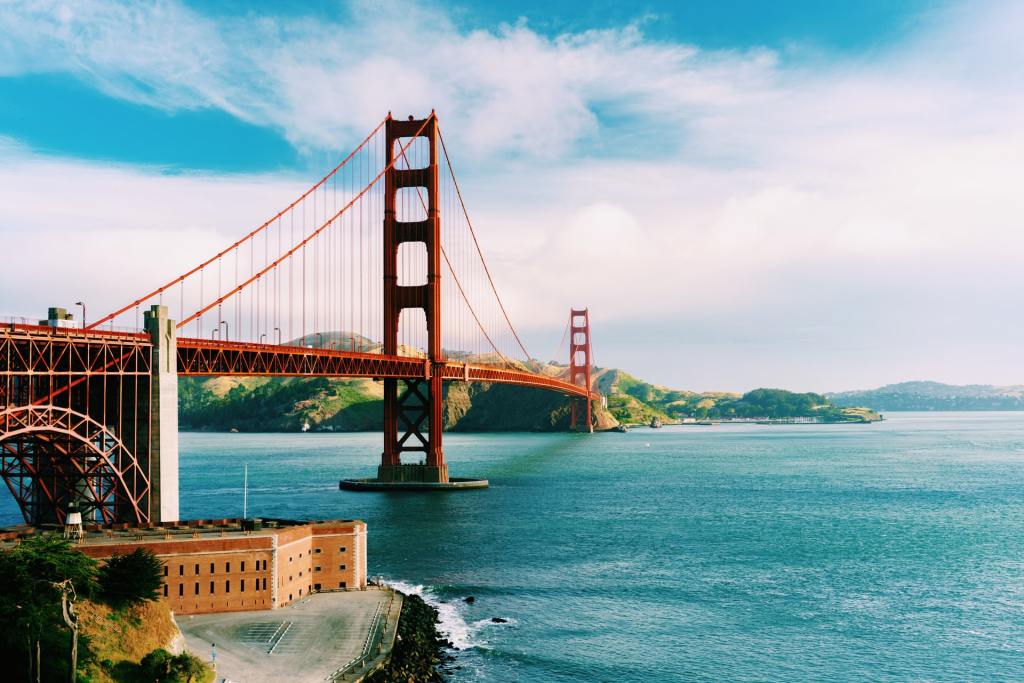
“Indeed, although in my travels I saw very good sites and beautiful country, I saw none which pleased me so much as this,” wrote Father Pedro Font in his diary [1]. He was talking about San Francisco. Fr. Font was the chaplain of the Spanish expedition led by Juan Bautista de Anza that had walked 1000 miles (1600 km) from Tubac, Arizona, to San Francisco, and on that fateful day of March 28, 1776, he blessed the cross that the troops had planted on a rock overlooking the Golden Gate Strait [3]. All of us who have stood at one end of the Golden Gate bridge and gazed across the majestic Pacific Ocean and San Francisco Bay would surely understand his sentiment.
While there, Captain Anza and Fr. Font selected the location for the mission, and three months later Fr. Francisco Palóu celebrated the first mass on June 29, 1776 (five days before the budding country of America proclaimed its independence on the other side of the continent.) That day that was long in coming. It took the Spanish explorers more than 200 years to find the site that would become the beautiful city by the bay. Here is how the story went.
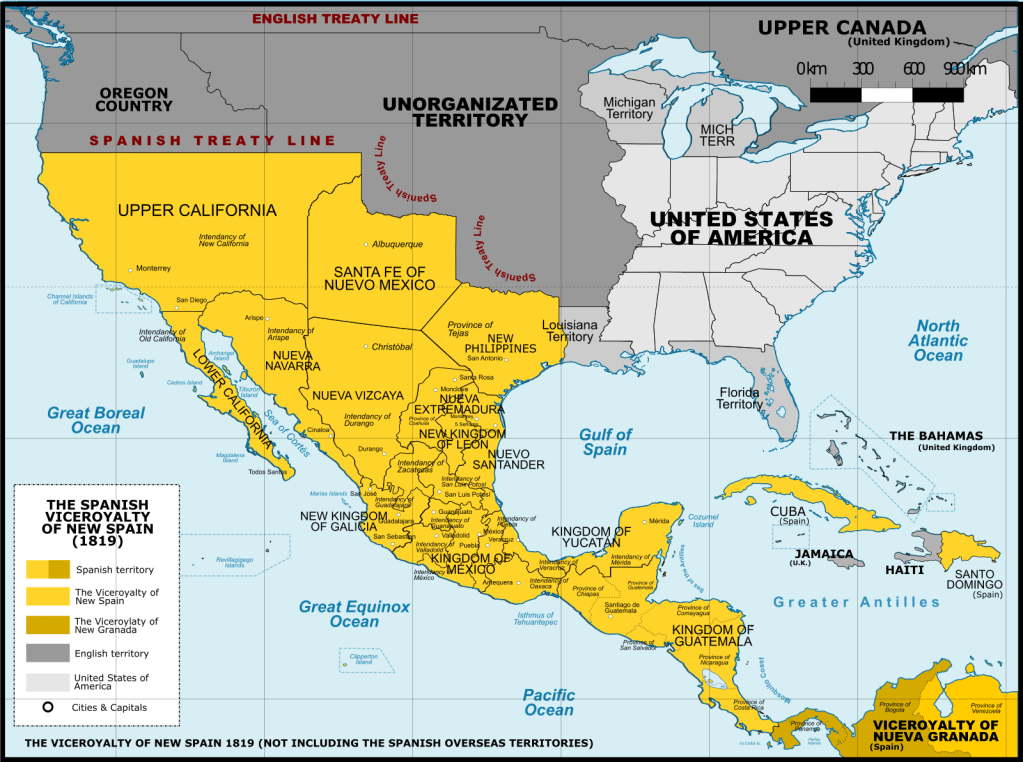
In May 1767, José de Gálvez, the Inspector-General of New Spain, faced a difficult task of implementing the Spanish King’s sudden order to expel all Jesuit priests (whom everyone loved) from the crown’s territory. To fill the void, Gálvez asked Fr. Junipero Serra to lead the Franciscan priests to Baja California (now part of Mexico). But then he went one step further: he wanted to establish a series of presidios (forts) and missions in Alta California (where the present state is) to guard against the Russian’s encroachment from the north [3].
As Stephen Binz wrote, “When the Father-President [Junipero Serra] was working out the details of the first missions with Inspector-General Gálvez, Serra asked why there was no mission planned to honor the founder of his [Franciscan] order. And Gálvez facetiously replied, ‘If St. Francis wants a mission, let him cause the harbor to be discovered and it will be placed there.’ “
“If St. Francis wants a mission, let him cause the harbor to be discovered and it will be placed there.”
José de Gálvez to Fr. Junipero Serra
Indeed, the large and protected natural harbor that the Spanish kingdom badly wanted in Alta California had been elusive. At least three earlier maritime expeditions dating back to 1542 had missed the entrance to San Francisco Bay, probably because the narrow Golden Gate Strait was (and still is) often shrouded by fog. At long last, though, in November 1769 Gaspar de Portolá and his land expedition serendipitously spotted the strait and the large, beautiful bay. Fittingly, they named this “excellent haven” San Francisco. Seven years later Mission San Francisco de Asís was born.


(Historic American Buildings Survey, deYoung Museum, San Francisco, Wikimedia Commons).
In God’s Time
As I read the story above, the words of the short-but-sweet hymn In His Time came to my mind:
In His time, in His time
He makes all things beautiful
In His time
In the past one year, as the pandemic wreaks havoc across the world, my wife Lili and I – like so many people – have asked, “Why now?” or “Why not now?” As we became empty-nesters, Lili and I wanted to move to another house, and in February 2020 we found a house that we liked. Alas, our loan application was rejected. I was mad. “Why not, Lord? I had never been rejected for a loan before.”
Then in late April this year, my mom in Indonesia fell and broke her ankle. I sighed, “Why now, Christ? This is Covid time; bad time to be in a hospital.” Two months later, as Covid cases suddenly increased sharply in Indonesia, Lili’s father contracted the virus and passed away. We cried. “Why now, God? Can’t you pick a better time to call him home? Yes, he was 83, but couldn’t he die later with loved ones around instead of alone in the hospital?”

We got the answer to our first question a month later when the state of Texas imposed a lockdown. Closing on the house and moving into it would have been very difficult. After the state slowly opened back up, we found a better house, got a loan, and we have been living happily in it. For the second question, I felt the Lord has given us a glimpse of the answer. As bad as it was for my mom to go to the hospital, it would have been considerably worse had it happened later, as the hospitals in Indonesia were overwhelmed by the Covid patients by then.
We haven’t got the answer to the third question, and we may never will. On His Ascension Day (May 13 this year), Jesus’ words gently reminded us, “It is not for you to know the times or seasons that the Father has established by his own authority” (Acts 1:7). So, we trust that Lili’s father’s death, along with thousand others’, will make things beautiful – in God’s time.
Prayer

Holy and eternal God,
give us such trust in your sure purpose,
that we measure our lives
not by what we have done or failed to do,
but by our faithfulness to you.

(New Zealand Anglican prayer [4])
The Mission Now and Some Nearby Sites
The mission church, built in the Spanish-Colonial style, is now located at 3321 16th St., San Francisco, CA 94114. It is also called Mission Dolores because the site was found on the feast day of Our Lady of Sorrows. The mission has a white façade and is adorned with three bells above its main door. It is the oldest intact building in San Francisco.

The mission is open to visitors, and it also still functions as an active church. The visiting and mass hours info is available at https://www.missiondolores.org/ Mission San Francisco was the farthest (northernmost) and the sixth mission founded during Fr. Junipero Serra’s presidency of the Franciscan mission in Alta California.
Looking at the picture of the Mission San Francisco’s interior, one thing that strikes me is its highly decorative ceiling. The beam posts are painted gold, red, silver, and white in the native design of Ohlone tribe who used to live in the area. The reredos (decoration behind the altar) was brought in on mules and oxen from Mexico in 1796. It features the statue of Mother Mary and her parents, St. Francis and St. Clare of Assisi, and St. Michael the Archangel around the cross [1].
Right next to the old mission is the big Mission Dolores Basilica, built a century after the old mission. Its wonderful stained-glass windows depict and introduce us to Fr. Serra, his student, biographer, and fellow missionary Fr. Palóu, and the 21 missions in California along with their patron saints and founding dates.

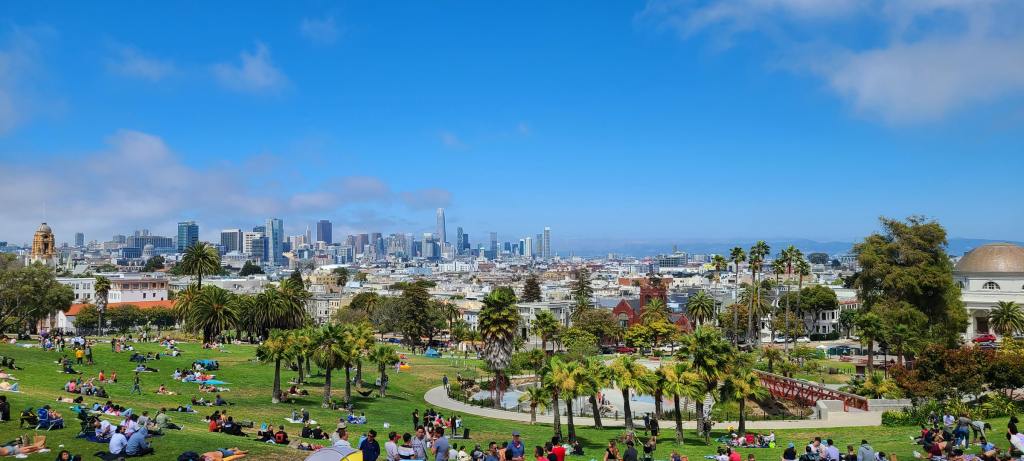
A short walk south of the church along Dolores St. is Mission Dolores Park. Lonely Planet guidebook calls it the “sunny side of San Francisco that has something for everyone” [5], and its southwest corner offers a magnificent view of downtown. It certainly seems to invite us to sit down for a while and reflect on God’s message.
Further Reading
- Binz, S. J. (2017). Saint Junipero Serra’s Camino: A pilgrimage guide to the California missions. Franciscan Media.
- Visit California. (n.d.). California Missions – A quick guide on the 21 historic Spanish missions.
- Goodwin, R. (2019). América: The epic story of Spanish North America, 1493-1898 (pp. 217-284). Bloomsbury Publishing Inc.
- Continuum Publishing Co. (1998). The complete book of Christian prayer (p. 204).
- Schulte-Peevers, A., et al. (2018). California. Lonely Planet.
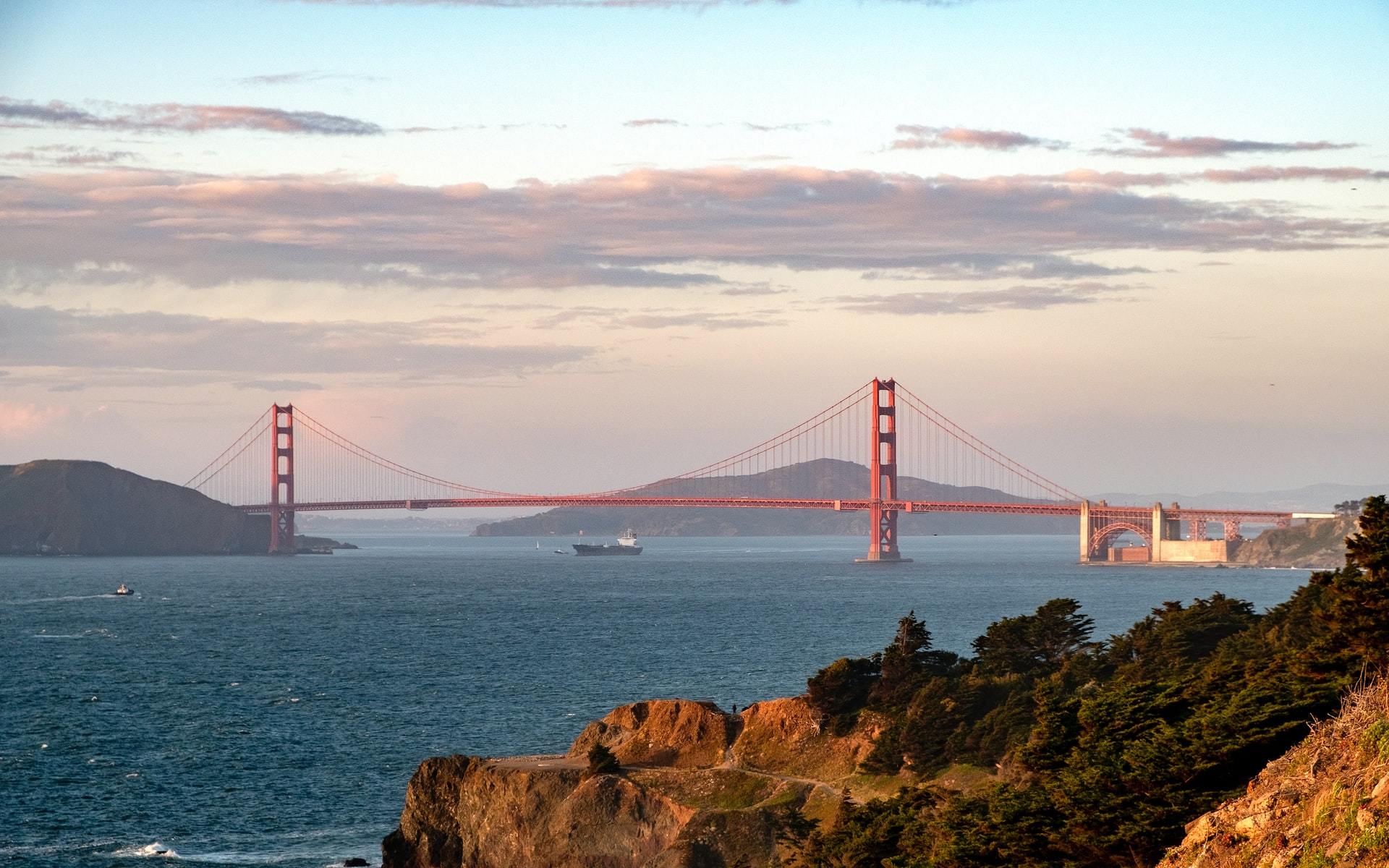
Credit for the feature photo: “The Golden Gate Bridge at sunset as viewed from San Francisco” by Lauren MacNeish on Unsplash (July 14, 2020).
 REFLECTIONS ON LIFE, WORK, AND FAITH IN THE 21ST-CENTURY AMERICA